Stay updated with masonry tips, remodeling ideas and home improvement insights from A&J Masonry LLC. Explore project guides, maintenance advice and expert information for Connecticut homeowners looking to improve and protect their property.
Connecticut homeowners building backyard patios face the choice between concrete pavers and poured concrete. Both work well in Connecticut weather when properly installed. The right choice depends on the look you want, the budget and the long-term maintenance you want to handle on your patio.
Concrete pavers in Connecticut patios come in many shapes, colors and patterns. Stamped patterns, contrasting borders and custom designs are possible with paver patios. Pavers can match brick or stone styles on the home or stand on their own as a design element.
The biggest advantage of pavers is the ability to lift and reset individual pavers if anything goes wrong. Settled areas, root damage or any single damaged paver can be addressed without tearing out the whole patio. The biggest disadvantage is more maintenance than poured concrete with weed prevention in joints and occasional resanding of polymeric sand to keep joints stable.
Poured concrete patios in Connecticut offer a clean monolithic look with various finish options including broom finish, troweled smooth, exposed aggregate, stamped patterns and stained or colored concrete. The finished surface has no joints to worry about, no weed growth and minimal ongoing maintenance.
The biggest disadvantage of poured concrete is that any cracking or settling is permanent until the concrete gets cut and repoured. Connecticut freeze and thaw cycles can crack improperly installed concrete patios within years. Properly installed air-entrained concrete with adequate base prep and control joints lasts decades.
Concrete patio installation in Connecticut typically costs less per square foot than paver patios for basic installations. Standard broom finish concrete is the most economical patio surface option. Stamped or colored concrete costs more and approaches paver pricing for premium finishes.
Paver patios have higher material costs and more labor time for individual paver placement. Basic concrete pavers can be similar in total cost to standard concrete for small to medium patios. Premium pavers with intricate patterns cost significantly more than poured concrete. A free written estimate gives real numbers for both options on a specific Connecticut project.
Both pavers and properly installed concrete handle Connecticut weather well over decades. The key for either option is the base prep. Six to eight inches of compacted gravel base with geotextile fabric below prevents freeze movement issues. Without proper base prep, both pavers and concrete fail within years.
Pavers handle freeze movement somewhat better than poured concrete because the individual pavers can shift slightly without cracking. Air-entrained concrete properly installed handles freeze cycles well without cracking. The installer matters more than the surface choice for Connecticut weather performance.
Pavers offer more design flexibility for Connecticut patios. Different colored pavers can create patterns, borders, accent areas and custom designs. Circles, curves and intricate patterns are easier with pavers than with poured concrete. Patios can be designed to match brick on the home or coordinate with stone landscape elements.
Poured concrete offers design through finish choices. Stamped concrete can mimic stone, brick or slate patterns. Stained or colored concrete adds visual interest. Exposed aggregate creates texture and visual interest. The design choices with concrete are different but not necessarily limited compared to pavers.
Paver patio maintenance includes occasional weed prevention and pulling, resanding polymeric sand in joints every five to ten years, and resetting any individual pavers that settle from freeze movement or root growth. Pressure washing every few years keeps the surface looking new.
Concrete patio maintenance is simpler. Periodic sealing every five to seven years extends the surface life and prevents stains. Cracks can develop and may need repair work. Replacement requires saw-cutting and complete tear-out and repour rather than individual section work.
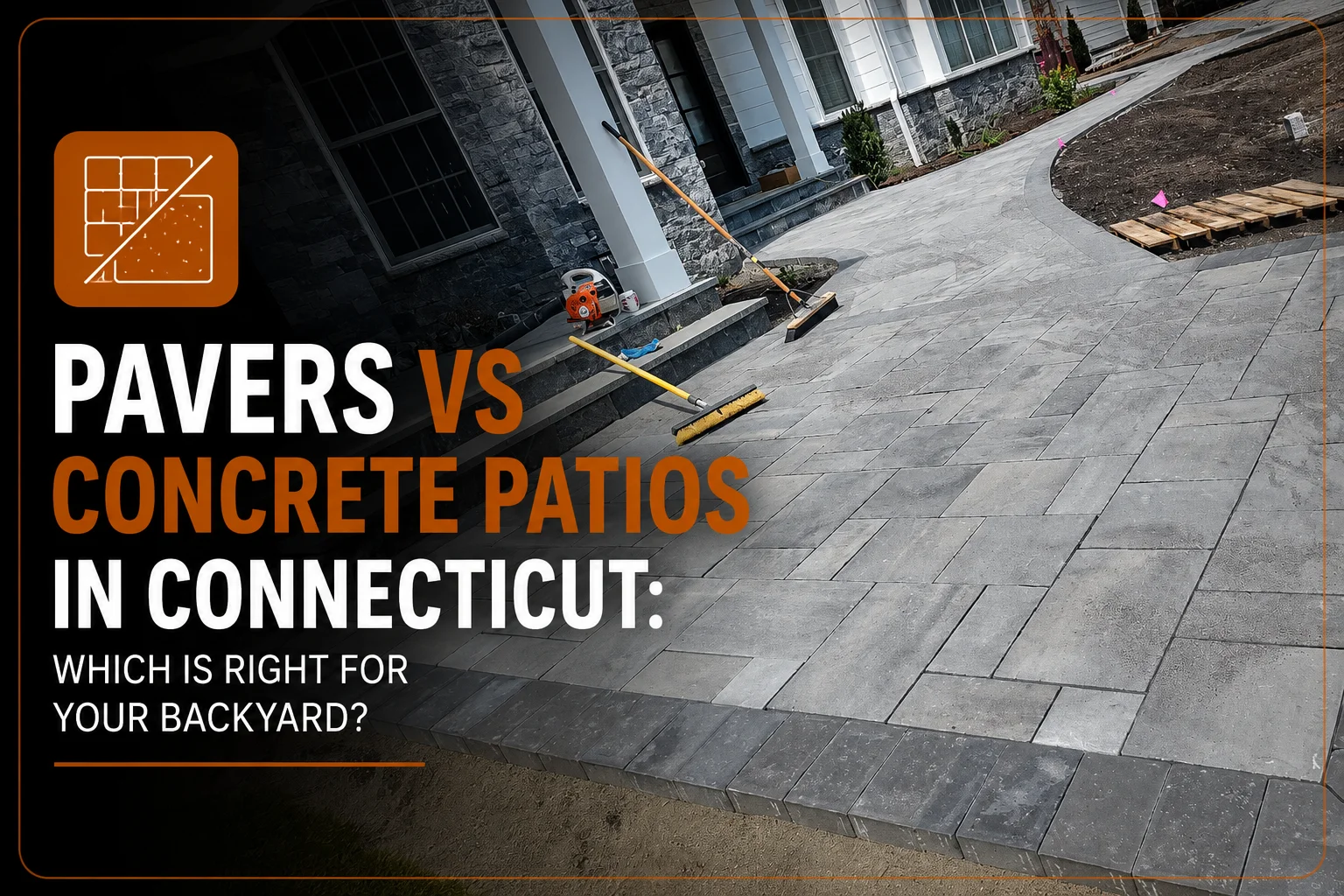
Whether pavers or concrete fits your Connecticut backyard better depends on the look, budget and maintenance preferences. A free on-site estimate evaluates the site and gives real numbers for both options.
(203) 460-7891
ajmasonry1985@gmail.com
171 Plank Rd, Connecticut
Over ten years serving Connecticut homeowners.
Licensed Connecticut Home Improvement Contractor.
Free on-site estimates with honest pricing.
